
I'm going to let you in on a secret that most homeowners never figure out.
I spent eight years as a general contractor before I moved to the other side of the table. I've been the guy with the clipboard, the guy who didn't call back, the guy who said "we'll get to it" and meant "I have no idea when." And I've also been the guy who, when a client said exactly the right thing, moved mountains to make their project happen.
Here's the truth: contractors are not lazy. We're not trying to frustrate you. We're overwhelmed. We're juggling twelve jobs, six subcontractors, three suppliers, and a truck that keeps breaking down. The homeowner who understands that – and knows how to work with it – gets the fastest service, the best quality, and the least stress.
After years on both sides, I've boiled it down to three phrases that actually work. Not magic spells. Just words that tap into how contractors think, what we care about, and what makes us move faster.
Phrase #1: "I need to know by Tuesday."
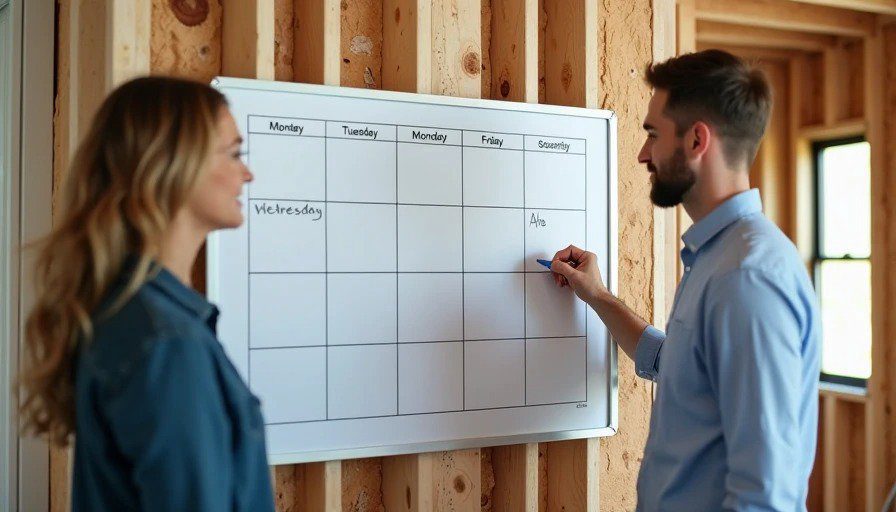
This is the most powerful phrase in renovation communication, and almost nobody uses it correctly.
Here's what most homeowners say: "Can you let me know when you're coming?" or "Just keep me updated." Those are open-ended, vague, and easy to ignore. The contractor hears "sometime eventually" and files it under "not urgent."
Now here's the same request, rephrased: "I need to know by Tuesday whether the plumber is coming Thursday, because if he's not, I need to cancel the tile order and save myself the restocking fee."
Notice the difference? You've given me:
A hard deadline (Tuesday)
A specific decision (plumber on Thursday or not)
A real consequence (restocking fee)
Contractors respond to deadlines because we live by them. But we also know that homeowners are often flexible – so we push things until we're sure. When you tell me you have a literal financial consequence tied to my answer, I'm suddenly very motivated to get you that answer.
The secret sauce: Name the consequence. Don't just ask for information. Tell me what happens if I don't give it to you – and make it something that affects me too. If you cancel the tile order, that delays my project, which means I'm explaining to my next client why I'm late. I'll call the plumber on Monday instead of Wednesday.
Field example: I had a client who said, "I need the window dimensions by Friday because the supplier charges a 15% restocking fee after that." I had those dimensions in her inbox by Wednesday. She gave me a reason to care.
Phrase #2: "Can you mark up the schedule while you're here?"
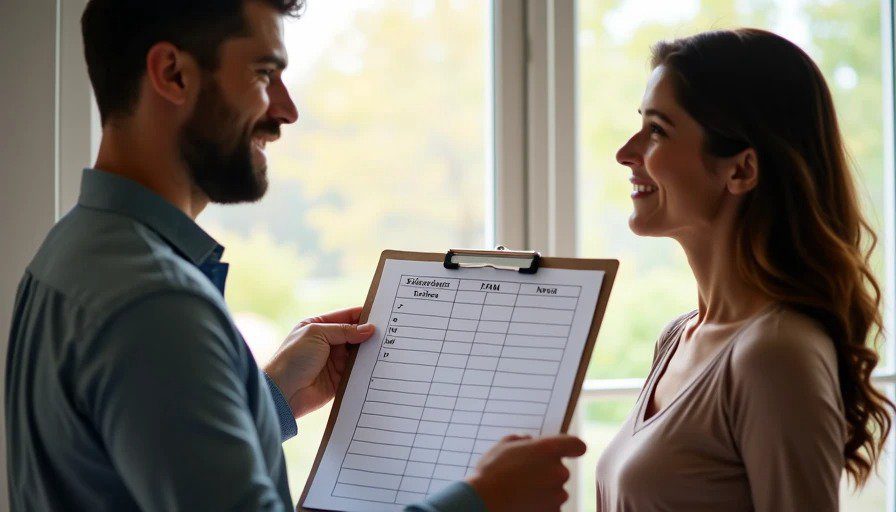
This one is sneaky, and it works because it catches contractors in the moment when they have actual site knowledge.
Most homeowners ask for schedules over text or email. "Can you send me the plan for next week?" That's easy to put off. I'm driving, I'm on a ladder, I'm arguing with a supplier – I'll do it later. And later never comes.
But if you catch me on site – while I'm standing in your kitchen, looking at the actual walls, talking to the actual trades – and you hand me a piece of paper (or a tablet) and say, "Can you mark up the schedule while you're here?" – I have no excuse.
Why this works: The information is right there in my head. I know what's happening because I just talked to the plumber and the electrician. It takes me 90 seconds to write it down. If you wait until I leave, I have to remember, then type, then send – and it becomes a task, not a conversation.
The secret sauce: Have a physical or digital template ready. Don't make me start from scratch. A simple printout with days of the week and a few blanks is enough. It takes less time to fill it out than it does to explain to you why I can't.
Field example: One client kept a whiteboard on the job site with a weekly grid. Every time I showed up, she'd point at it and say, "What's happening this week?" I'd grab a marker and fill it in. It became a habit, and then I started using it as my own reminder.
Phrase #3: "I don't expect an answer now – but let me know by [day]."
This one is pure psychology. It lowers the pressure on the contractor while still creating accountability.
Here's the mistake most homeowners make: "When are you going to finish the bathroom?" That's a huge, uncomfortable question. It makes me defensive. I don't want to commit to a date because I know things change. So I give you a vague answer like "soon" or "we're working on it."
Now here's the same question, rephrased: "I don't expect an answer now – I know you're still in the middle of it. But could you let me know by Friday what you think the timeline looks like?"
Why this works:
You acknowledge that I'm busy (which makes me feel seen).
You take the pressure off the immediate moment (so I don't panic and give you a fake answer).
You still create a deadline (Friday) that I can work toward.
I'm not going to lie to you on the spot if you give me time to think. And I'm a lot more likely to give you a realistic estimate if I've had a couple of days to talk to my subs and check material availability.
The secret sauce: Give me room to say "I don't know yet" without making it sound like a failure. If you say "I don't expect an answer now," I can honestly say "I'll check and get back to you" – and then I actually will, because I told you I would and you didn't corner me.
Field example: A client asked me, "When do you think the tile will be done?" I started to give a vague answer. She interrupted: "I don't need a promise – I just need a guess by Thursday so I can book the painters." She got a guess by Wednesday. The painters were booked. The job flowed.
The big secret: contractors are people, not machines
Here's the thing that changed everything for me when I started managing contractors instead of being one: they want to do a good job. They just need to be set up for success.
Contractors are drowning in information. They have suppliers calling, trades texting, clients emailing, and inspectors showing up unannounced. When you add a question to that pile, it's not that they don't care – it's that they can't process it all.
The phrases above work because they reduce the cognitive load. They turn vague questions into specific, actionable tasks. They create deadlines that feel natural. They acknowledge the chaos while still expecting a result.
The bonus phrase: "I'll make the call / send the email / deal with the supplier – just tell me what to ask for."
This one is pure gold because it changes the relationship from "client vs. contractor" to "team vs. problem."
Most homeowners say: "Can you deal with the supplier about the delayed tile?"
The contractor hears: "I need you to spend 45 minutes on hold, argue with someone you don't know, and solve a problem that's not really your fault – on top of everything else."
Now try this: *"I'll call the supplier and deal with them – just tell me what to ask for. Do I need a tracking number? A new delivery date? A credit?"
Suddenly, I'm not adding a task to my list – I'm handing you a one‑sentence answer that takes me 10 seconds. And I'll tell you, because I want that tile to arrive as much as you do.
The secret sauce: Offer to take something off my plate, but don't make me explain the whole situation from scratch. Just ask for the one piece of information you actually need.
What's your magic phrase?
I've shared three that worked for me – as a contractor and as a client. But I know there are dozens more out there.
What phrase have you used that made a contractor suddenly pay attention?
What request got an immediate response when others got ignored?
What did you say that turned a difficult conversation into a productive one?
Some people swear by starting with "I know you're busy..." Others use "If you can get me an answer by [day], I'll stay out of your hair." I've heard of homeowners who say "I'm going to be on site tomorrow at 10 – if you have questions, I'll be there" – which shortens the back‑and‑forth to a single conversation.
Drop your magic phrase below. I'm still collecting them, and honestly, I use them on contractors now too. Sometimes the best line is the one you haven't heard yet.