I'm going to tell you about a moment that still makes my stomach drop when I think about it.
It was a Tuesday morning. The framing crew had finished the kitchen last week, the HVAC guys had run all their ductwork on Monday, and the electrician was scheduled to start pulling wire that afternoon. The plan was simple: rough‑in everything this week, close up the walls next week, and stay on schedule.
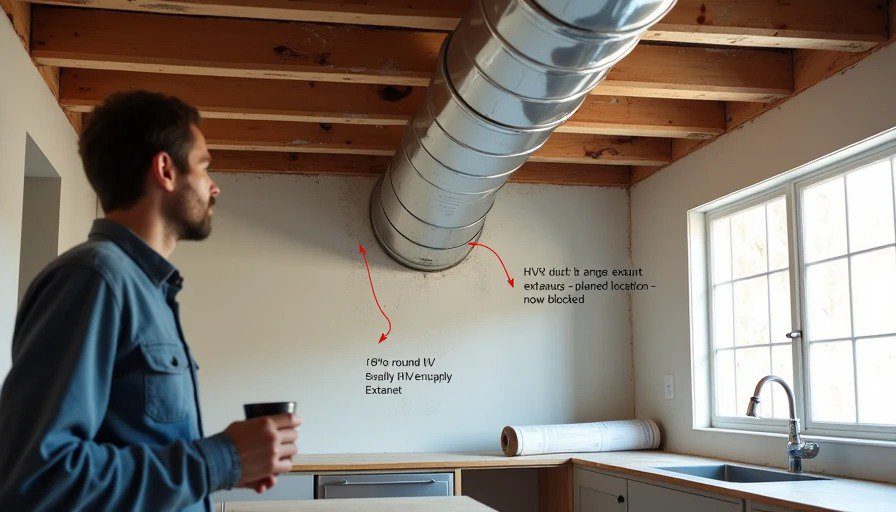
I walked into the kitchen at 7:30 a.m. with my coffee, doing my usual morning walk‑through. I looked up at the ceiling – and my coffee cup stopped halfway to my mouth.
There it was. A beautiful, shiny, 8‑inch round HVAC supply duct, running straight through the chase we had specifically designed for the range hood exhaust. Not near the chase. Through it. Dead center. As if the HVAC installer had looked at the plans and said "this is the perfect spot."
The range hood exhaust – a 10‑inch round duct we had planned for a 900 CFM commercial‑style hood – was supposed to go straight up through that chase, then turn 90 degrees and exit through the roof. We had framed the chase specifically for that purpose. We had marked it on every set of drawings. We had discussed it in three separate trade coordination meetings.
And there it was: an HVAC duct, blocking the entire path.
The near‑miss factor
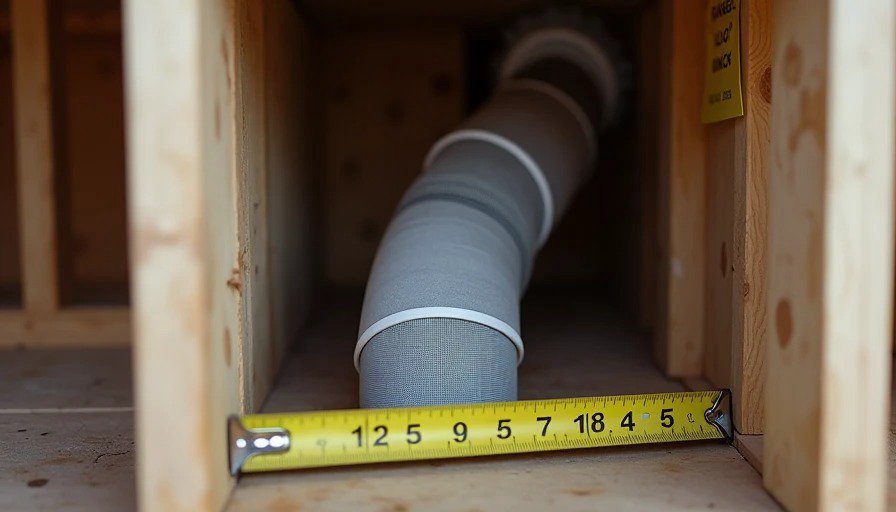
Here's what saved us: I caught it before they sealed the chase. The drywall wasn't up yet. The framing was still exposed. The HVAC guys had run the duct, but they hadn't insulated it yet, and they hadn't connected it to the supply plenum. It was just... sitting there. A monument to poor communication.
If I had caught it a week later – after the drywall was up and taped and mudded – we would have had to cut open the ceiling, relocate the duct, patch the drywall, re‑tape, re‑mud, re‑paint. That's at least a week of delay and a couple thousand dollars in change orders.
If I had caught it after the kitchen cabinets were installed? Nightmare. We would have had to tear out cabinets to access the chase. That's not a week – that's a month.
So I did what any panicked homeowner would do. I took a photo. Then I called my GC. Then I stood there staring at the duct until someone showed up.
The inspection point where this was caught
We had a system – which I now realise is the only reason this didn't become a disaster. Every morning before any trade started work, I did a quick walk‑through and took photos. Not because I'm obsessive (well, maybe a little), but because I had learned from previous renovations that things change without anyone telling you. Walls move. Ducts shift. Electricians interpret "over here" differently than you meant it.
But the real inspection point that caught this was the rough‑in coordination walk‑through – a meeting we scheduled for the morning after the HVAC was roughed in, but before any other trades started their rough‑in work. The rule was: everyone who touches the ceiling or walls had to be present. The GC, the HVAC foreman, the plumber, the electrician, and me (the client). We walked the entire kitchen together, calling out every duct, every pipe, every wire run.
That meeting is where we found the conflict. And because we found it then, we could fix it without ripping anything out.
How we solved it
The solution, as it turned out, was not elegant but it was workable. We rerouted the HVAC duct about 18 inches to the left, running it parallel to the exhaust chase instead of through it. That meant adding two 90‑degree bends and about four feet of extra ductwork. The HVAC guys grumbled – bending 8‑inch rigid duct is not fun – but they had the space because the ceiling was still open.
We also had to adjust the supply register location, which meant the electrician had to move a light fixture. That added a couple of hours to the electrical rough‑in. But compared to the alternative? We got off easy.
The lesson I learned: trust no one, verify everything
What this taught me is that even with good plans, even with meetings, even with the best intentions – things go wrong. The HVAC installer that day was a subcontractor who had never been to the site before. He was working from a set of prints that were two revisions old. He didn't know about the range hood chase because it wasn't on his print – it was on the architectural print, which he hadn't seen.
So now my rule is: every trade gets a copy of every relevant drawing, and I walk them through the critical paths myself. I don't assume anyone has read anything. I don't assume anyone has coordinated with anyone else. I physically point at the chase and say "this is where the exhaust duct goes, please do not put anything else here."
And I take photos. Lots of photos. Dated, timestamped photos that I can refer back to if something changes.
What trade conflict did YOU catch the morning of?

Now it's your turn. I'm sure I'm not the only one who has had a heart‑stopping moment at 7:30 a.m. staring at something that shouldn't be where it is.
So tell me your story:
What trade conflict did you discover? Was it HVAC vs. plumbing? Electrical vs. structural? A window opening that didn't line up with the framing?
What time of day did you find it? First thing in the morning? Middle of the afternoon when you stopped by unexpectedly?
How close was it to being sealed up? Did you catch it with the drywall already on, or were the studs still showing?
What was the solution? Did you reroute one trade, or both? Did it cost extra? Did it delay the project?
What system did you put in place afterward to make sure it didn't happen again?
I'm sharing my story not because I'm proud of it (I'm not – I should have flagged that chase more clearly), but because I know I'm not the only one. Every renovation has a near‑miss. The difference between a near‑miss and a full‑blown disaster is often just timing and a good morning walk‑through.
Let's hear yours. Drop your trade conflict stories below – the good, the bad, and the "I can't believe that happened." I'll start.