If your kitchen layout includes a blind corner, you already know the spot where base cabinets meet can become a black hole for baking sheets, small appliances, and that one pot you only use at Thanksgiving. A corner cabinet pull out is the piece of hardware that turns that awkward dead zone into usable storage. But here is what most homeowner-project-managers don't realize until it's too late: this item has a lead time, a specific measurement process, and an install sequence that can stall an entire kitchen remodel if you treat it as an afterthought.
Why the corner cabinet pull out is a scheduling trigger, not just a hardware choice
Renovation forums are full of threads where someone says, 'I'm three weeks from countertop template and I just realized I haven't ordered anything for my corner cabinet.' That thread is a post-mortem in progress. A corner cabinet pull out is not a shelf you can grab at the big-box store on the way to the job site. Most of the good systems are special-order items. Rev-A-Shelf, Hafele's LeMans, and Knape & Vogt all make versions that fit specific cabinet widths, and they ship from regional distribution centers. In my experience, that means a two-to-six week lead time, depending on whether your local dealer stocks the size you need.
That two-to-six week window is exactly why this item belongs on your procurement schedule before your cabinet order is finalized. If you pick the hardware after the cabinets are built, you inherit whatever opening the cabinet manufacturer left you. If you pick it before, you can adjust the cabinet spec to match the pull-out system. This is the difference between a smooth install and a last-minute return at the supplier counter.

Measure twice, order once: the exact dimensions you need
Before you order anything, you need four numbers: the inside width of the cabinet box, the inside height, the inside depth, and the door opening style. For a blind corner base cabinet, the width is often 33, 36, or 39 inches, but the usable space is only as wide as the opening once the cabinet frame and hinges are in place. A 33-inch cabinet might spec for a pull-out system that fits a 30-inch opening. The manufacturer's instruction sheet will tell you the minimum opening required. Ignore it and you are ordering a pretty piece of hardware that no cabinet can accept.
Rev-A-Shelf's corner cabinet pull out line, for example, uses a full-extension slide system with a wire basket. Basic two-basket kits run about $150 to $250. The Hafele LeMans system, which uses a pivoting two-tier tray, sits closer to $300 to $500. If you add installation labor at $100 to $200, you're looking at a $250 to $700 line item in your budget. That is not a small enough number to leave out of your initial renovation spreadsheet.
Order timing: when to pull the trigger
Here is the timeline I use on my own projects. Set the corner cabinet pull out order date at least six weeks before the cabinet install date. That gives you a two-week buffer if the first size you order doesn't fit. If you are doing a kitchen with stock cabinets, you might be able to get away with ordering as late as two weeks before, because the dealer can often pull the size from a local warehouse. But for semi-custom cabinet lines, the pull-out hardware is often packed with the cabinet order. That means you need to lock in the hardware selection before the cabinet factory cuts the door panels.
What actually happens on install day
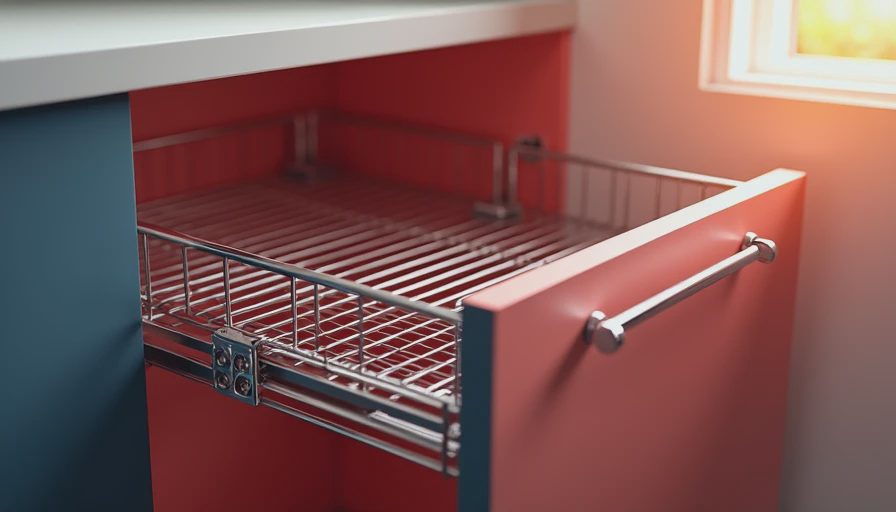
The install itself is a half-day task if the cabinet is already set and level. Your cabinet installer or a skilled carpenter will remove the cabinet doors, lay the slide tracks on the floor of the cabinet, and screw them into the side panels. The baskets or trays then clip into place. The final step is adjusting the height so everything clears the door frame. In my own kitchen, the installer spent 40 minutes on the first corner unit and 20 minutes on the second one. The job is not hard, but it is finicky. If the slides are not parallel, the basket will rack to one side every time you pull it open. The one timing catch: do not finalize the door adjustment until after the countertop is installed. The weight of a stone countertop can shift the cabinet box a fraction of an inch, and that shift can make a perfectly aligned door bind. Give yourself a follow-up appointment on the calendar for two weeks after countertop day to recheck the swing.
The three mistakes most homeowners make
The first mistake is ordering by the cabinet's outside dimension. A 33-inch cabinet measured with a tape around the frame gives you a false number. You need the inside clearance, which is often two to three inches narrower. The second mistake is forgetting to confirm the door hinge swing. Some corner pull-out systems need doors that open a full 90 degrees; if you have a half-overlay hinge with limited swing, the tray will catch on the door edge when you open it. The third mistake, and the one that costs the most schedule time, is treating this as a standard stocked item. A homeowner on this forum once wrote about ordering a corner cabinet pull out from an online retailer, waiting ten days for shipping, then discovering the box was for a different cabinet depth. The return and reorder added three weeks, which pushed their countertop template appointment.
Put it on the schedule
If it's not on the schedule, it's not happening. Add the corner cabinet pull out to your procurement tracker with an order date, a lead-time buffer, and a named installer. Then post your timeline below. At what week did you order this hardware, and how did it affect your cabinet install?