A sticky deadbolt can stall a closeout just as fast as a delayed cabinet order, and that is why door lock repair belongs on the schedule early, not as a vague someday task. Homeowners tend to notice the problem only after the door starts rubbing, the key gets fussy, or the latch refuses to catch on the final walkthrough. By then, the painter is gone, the trim is installed, and the missing alignment turns into a real delay. The good news is that most lock issues are small, cheap, and fast when someone handles them in the right order.
What door lock repair usually covers
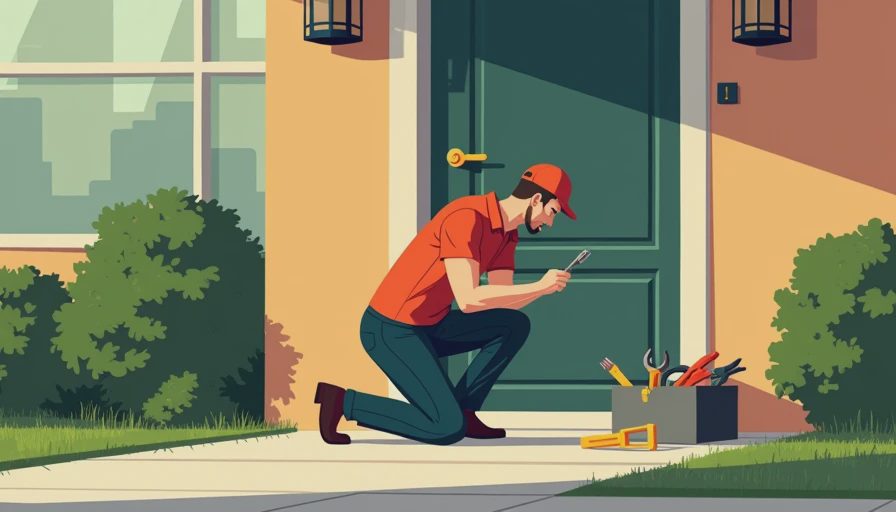
A normal service call is less dramatic than people expect. It often starts with a loose knob set, a tired deadbolt, a misaligned strike plate, or screws that backed out after the door settled. In a lot of homes, what looks like a broken lock is really a hinge or alignment issue, so the technician checks the door swing before replacing parts. That is the practical side of door lock repair: fix the thing that is actually failing, not just the part that is easiest to quote.
If the key turns but the latch drags, a simple adjustment can solve it. If the cylinder feels rough, the lock may need rekeying or a new core. If the hardware is old and the finish is flaking, the job can shift from a quick tune-up to a replacement conversation. Either way, the first pass should be diagnostic, because that is where the time and money get saved.
Signs the problem is adjustment, not a full replacement
A door that latches when it is open but not when it is shut usually points to alignment, not failure. The same goes for a deadbolt that only binds after a fresh coat of paint, a slab that swelled in humid weather, or a strike plate that sits a little too high after the house settled. In coastal climates, moisture can make wood doors expand enough to cause seasonal sticking. In dry places, especially around Phoenix or Las Vegas, the issue is more often shrinkage, loosened fasteners, or a gap that changed after HVAC work.
That is why it pays to test the basics before ordering new hardware. Open the door and see whether the latch throws cleanly. Close it slowly and watch where the bolt hits. Check the hinges for movement and look at the screws in the strike plate. If the key works smoothly but the door only fights you when the slab is shut, the repair is probably in the frame, not the lock body.
Costs, parts, and labor for door lock repair
Prices stay pretty manageable when the problem is small. A straightforward door lock repair often lands between $75 and $150 for a daytime locksmith or handyman visit, while after-hours calls can jump to $150 to $300 or more. Rekeying is usually cheaper than replacement, often around $20 to $50 per cylinder, which is why a lot of homeowners choose that route after a move or a rental turnover. A basic new deadbolt can run $30 to $120, with higher-end handlesets and smart locks climbing into the $120 to $300 range before labor.
Brand matters mostly for parts availability and finish matching. Common consumer lines from Schlage and Kwikset are easy to source at big-box stores, while higher-end hardware from Baldwin or similar lines may take longer to match if you are trying to keep a consistent look across the house. If the schedule is tight, it is smarter to buy what the installer can get immediately than to wait two weeks for a special finish that only matters after move-in.
How to schedule the work around painters, trim, and final clean
The cleanest sequence is usually paint first, hardware second, final adjustments last. That way, the painter is not masking around a lock body and the lock tech is not asked to work around wet trim. If the door is exterior and the home is occupied, leave one functioning lock in place until the new hardware is ready, then swap the cylinder or deadbolt in one visit. For a punch-list job, schedule the visit after the door has had time to settle but before final cleaning, because dust, caulk, and paint overspray can all affect fit.
This is also where climate and timing matter. In Portland, a week of rain can change how a freshly finished door hangs. In a dry climate, a newly installed slab may tighten up after a few hot afternoons. Build a little slack into the calendar instead of forcing the hardware to be final before the door itself is stable.
When door lock repair should turn into replacement
There is a point where the old part is costing more time than it is worth. If the keyway is stripped, the deadbolt body is cracked, the finish has rusted through, or replacement parts are no longer stocked, swap the whole set instead of chasing one more temporary fix. The same goes for hardware that fails repeatedly after two or three adjustments. At that point, you are not dealing with a one-off issue; you are dealing with worn parts, and the schedule will keep slipping until the whole assembly is changed.
Replacement also makes sense when the look of the house changed enough that the old hardware no longer fits the rest of the finish work. A new front door, fresh trim, or updated entry set can make a mismatched lock stand out in a bad way. If the labor to nurse the old hardware along comes close to the price of a new set, replacement is the cleaner project choice.
A practical homeowner checklist before you call
Before you book the visit, take one photo of the door open and one photo of it shut, because those two angles tell the installer a lot. Write down whether the key sticks, the latch misses, the deadbolt scrapes, or the handle feels loose. Ask for a labor price, a parts price, and a rekey price in the same quote so you can compare apples to apples. If the entry is part of a larger remodel, tell the tech whether the door was recently painted, rehung, or fitted with new weatherstripping, since any of those can change the diagnosis.
The best lock jobs are the boring ones: one trip, one adjustment, no surprise parts run, and no delayed punch list. If it is not on the schedule, it is not happening, and the next question is simple: what is actually holding your lock job up right now?