
If you've been looking for how to clean window tracks after drywall dust, paint overspray, or a wet winter, treat it like a small punch-list task instead of a Saturday killer. On a project board, this is one of those jobs that gets better when you do it at the right moment: after the dusty work is done, before final touch-up paint, and before anyone starts adjusting locks or rollers. A clean track helps a slider open without a shoulder check, and it also makes it obvious when a sash, roller, or weatherstrip is actually damaged. If the window is only dirty, the fix is cheap. If the track is packed, warped, or rusted, the dirt was just hiding a bigger problem.
What you need before you start
Start with a vacuum that has a crevice tool or a small brush attachment, a microfiber cloth, an old toothbrush, a spray bottle, warm water, a drop or two of dish soap, and a plastic putty knife or plastic scraper. A handheld Shop-Vac or Ridgid wet-dry vac is ideal if the tracks are full of drywall dust. The whole supply list usually runs about $10 to $25 if you already own the vacuum. If you are cleaning after a renovation, do not start until sanding is finished; otherwise you will just turn fine dust into paste. If you are in a humid place like Portland, give the tracks extra drying time. In a dry place like Phoenix, the problem is usually packed grit, not mildew.
How to clean window tracks without missing the corners
The fastest answer to how to clean window tracks is to remove the loose material first. Open the sash fully or lift out the movable panel if the design allows it, then vacuum the rails, corners, and meeting points where dirt hides. Brush the corners next with a dry toothbrush so the dust comes free before you add water. Then mist the track with warm water and a small amount of dish soap, not a soaking spray. Wipe with a microfiber cloth, then go back with the toothbrush for the narrow grooves and any screw holes that collect grit. If you see weep holes, clear them gently so water can drain later. Dry the track before closing the window, or the leftover moisture will catch more dust right away.
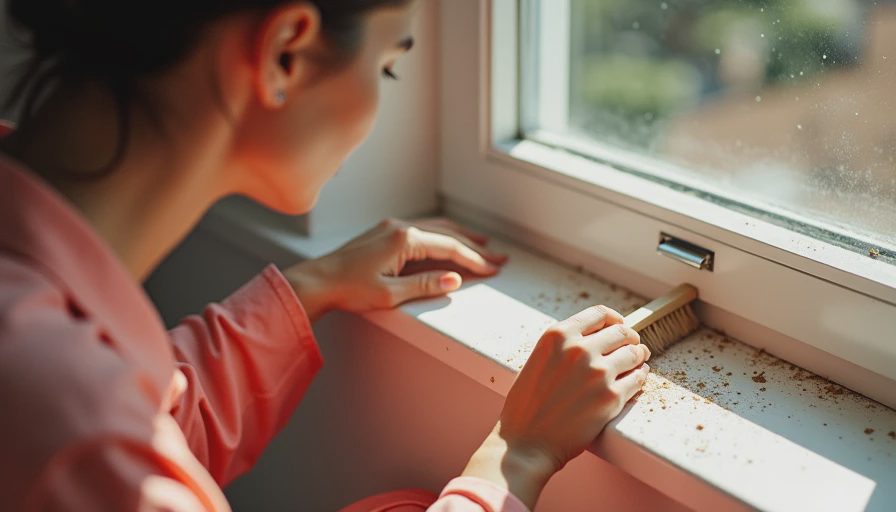
A good rule here is to move from dry to damp to dry again. That is faster than starting with a wet rag and grinding everything into the corners. On painted wood, use less liquid and skip harsh scrubbing. On vinyl or aluminum, you can be a little more aggressive, but still avoid metal tools that scratch the surface. If the rollers or channel are exposed, wipe them clean too; a dirty roller can make a window feel broken even when the frame is fine.
How to clean window tracks when grime has been sitting for years
When buildup is old, how to clean window tracks changes a little. You still vacuum first, but stubborn spots usually need a longer dwell time. Spray the track with a mild soap solution and let it sit for three to five minutes. For mineral spots from condensation or sprinklers, a 50/50 mix of white vinegar and water usually loosens the crust. For greasy residue from kitchen windows or handprints near a patio door, a paste of baking soda and water works better than more soap. Use a plastic scraper to lift the softened mess, not a metal blade. Finish by wiping everything dry and checking the corners for black spotting. If the spot comes back after you dry it, you are probably looking at mildew from trapped moisture, not simple dirt, and the fix is better ventilation plus a drier track.
Where this fits in a renovation schedule
This is one of those tasks that should land after the heavy mess and before final punch list signoff. If painters are coming, clean the tracks first so dust does not cling to fresh caulk or trim paint. If new windows were just installed, wait until installers finish adjustment and then do the cleanup; otherwise you may end up cleaning twice. During a full remodel, window track cleaning belongs after drywall sanding, cabinet install, and any interior trim cuts that throw sawdust. It is not glamorous, but it prevents callbacks when a homeowner notices a window that used to glide fine before the project dust moved in. If your schedule is tight, budget 15 to 20 minutes per opening for a decent first pass and less than half that for routine maintenance once the tracks are already clean.

When cleaning is not enough
Sometimes the track is not dirty, it is damaged. If the sash drags after you clean it, the rollers may be worn, the frame may be out of square, or the weatherstripping may be folded over. Cracked vinyl, rusted aluminum, and soft wood around the sill are not cleaning problems. They are repair problems. A handyman might charge $75 to $150 for a small window adjustment or deep clean, while roller or track parts can be another $15 to $40 depending on the window type. If you are seeing rot, broken hardware, or a sash that will not stay balanced, stop treating it like a maintenance chore. That is the point where cleaning buys time, but replacement or repair buys the real fix.
A simple cadence that keeps the job small
Once you know how to clean window tracks, the job gets easier to keep under control. In an occupied home, a quick quarterly wipe is usually enough for interior windows in moderate climates. In a renovation zone, check them after any dusty trade day and again before final cleaning. Kitchens, sliders to patios, and basement windows need more frequent attention because they catch grease, pollen, and moisture at the same time. The goal is not perfection. The goal is to keep the tracks open, dry, and easy to inspect so a small issue does not hide behind a layer of grit for another season. If it's not on the schedule, it's not happening. What kind of window tracks are you dealing with right now: vinyl sliders, old aluminum, or painted wood that needs repair first?