Your sump pump sits in that unfinished corner of the basement, working only when you're not watching. The day it stops, you're dealing with ruined drywall, a soaked water heater, and an emergency plumber at triple rates. Sump pump maintenance is the difference between a 10-minute habit and a 3 a.m. call that costs more than a new pump. It's a moving machine with a float switch, a check valve, and a discharge line. Skip the regular checks, and you will be shopping for a replacement in the middle of a storm.
Why Sump Pump Maintenance Matters Before a Storm
Most homeowners never touch the pump until the basement takes on water. By then, the damage is already happening. A typical submersible pump lasts 7 to 10 years, but only if the intake screen stays clean and the float switch moves freely. A pump that cycles every 30 seconds is about to burn out because the check valve is leaking or the float is jammed. That rapid cycling is the first sign to act.
If you're running a renovation project, a wet basement can set back flooring installs, ruin stored materials, and throw your whole schedule off. Dust from concrete and drywall work settles straight into the pit, so plan a cleaning after dusty trades. Put sump pump maintenance on the same calendar as your rough-in inspections and final walkthrough. If it's not on the schedule, it's not happening.
The Monthly 60-Second Bucket Test
Once a month, pour a bucket of water into the sump pit. The pump should kick on, drain the pit, and shut off. If it doesn't, check the power cord, the circuit breaker, and the float. A stuck float is the most common failure point; you can usually free it with a screwdriver or replace it for $20 to $40. This test also tells you whether the discharge line outside is clear. If water sprays back into the pit through the check valve, the valve is failing — catch it then, not during a downpour. Tie the test to smoke detector battery day so it actually happens.
The Seasonal Sump Pump Maintenance Checklist
Now the twice-a-year deeper work.
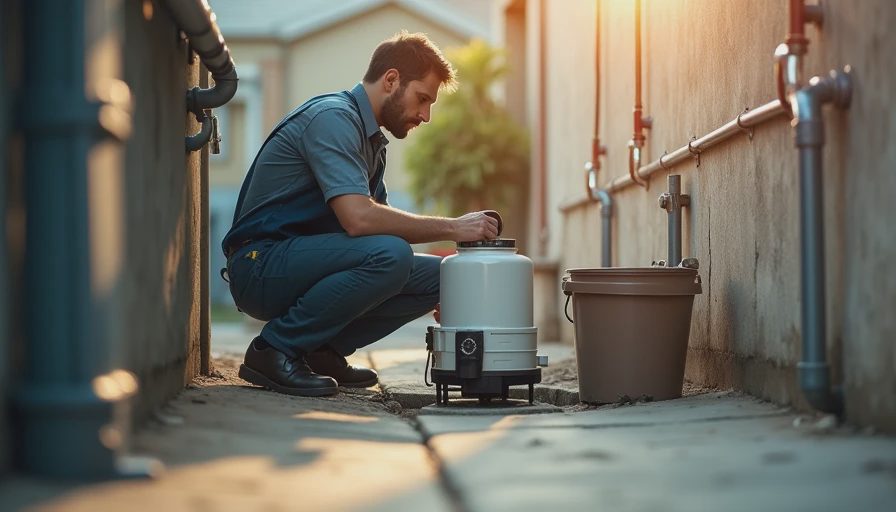
Spring: After snowmelt and before heavy spring rain, pull the pump and clean the pit. Disconnect the power, scoop out silt, gravel, and dead leaves, then flush the pit with a hose. Inspect the discharge line where it exits the foundation. Make sure it slopes away and carries water at least 6 feet from the house. If you have a battery backup, check its charge; batteries last 3 to 5 years.
Fall: Before leaves start dropping, do the same cleaning. Test the check valve and replace it if it's stuck or rusty. Use a shop vac to clear the inlet hole at the bottom of the pit — that's the most common clog point after a season of debris. After either cleaning, do the bucket test again to confirm everything works before you close up the basement for the season.
What Skipping Sump Pump Maintenance Really Costs
Let's put a real number on a common failure. A neighbor skipped the fall cleaning because work was busy. A surprise storm dropped 3 inches of rain overnight. A small pebble wedged the float halfway up, the pump ran 12 hours, the motor overheated, and the breaker tripped. The basement took on 2 inches of water. Drywall repair ran $1,200, and the emergency pump replacement added $500. That's $1,700 from one missed 20-minute task. The pump didn't die of old age; it died of neglect. This is why sump pump maintenance belongs in your renovation punch list, not the "I'll get to it later" pile.
When to Bring in a Pro
Most of the work is DIY, but not all of it. If the pump has no power, the fault may be in the wiring — an electrician charges $150 to $300 for the visit. If the discharge line is blocked underground, a plumber can jet it for $250 to $500. Full pump replacement runs $500 to $1,200 installed, and a battery backup adds another $300 to $600.
Common Sump Pump Questions
Do I really need a backup battery? If your area loses power during storms even once a year, yes. A standard pump is useless without electricity, and the heaviest rains often knock it out. A backup battery turns a flooded basement into a minor inconvenience for $300 to $600.
Can I test the pump in winter? Yes, but check the outdoor discharge first. If it's frozen, the water will pour back into the pit. Scrape the ice off the pipe before you do the bucket test.
What if my pump runs constantly even after cleaning? Check the check valve and the shutoff height. If it still cycles, groundwater may be flowing in faster than the pump can discharge. That's a foundation drainage issue that needs a contractor.
Add It to Your Project Schedule
Here's the short version to paste into your calendar:
Monthly: Bucket test. Pump turns on and off. Check outdoor discharge for steady flow.
Spring: Clean pit and intake screen, test check valve, inspect drainage slope, check battery backup.
Fall: Repeat spring cleaning, clear inlet hole, replace backup battery if needed.
After any big storm: Listen for rapid cycling and look for moisture around the pump.
That's 10 minutes a month and about 90 minutes twice a year. Compare that to the $1,700 bill above. Sump pump maintenance is one of those rare tasks where the process, not the gear, prevents the emergency. If it's not on the schedule, it's not happening. Add it this week and thank yourself the first time the storm sirens go off.