You sign the contract. You pay the deposit. And then… silence.
Fourteen weeks until your custom kitchen cabinets arrive. That's nearly a third of a year. Meanwhile, your friend ordered stock cabinets from a big-box store and had them in two weeks. You start wondering: What are they actually doing for 14 weeks? Did I make a mistake?
You didn't. But to survive the wait without losing your mind — or your renovation timeline — you need to know exactly where those 14 weeks go, when paying extra actually moves the needle, and how to use the waiting period so your project doesn't fall apart the moment the truck pulls up.
The 14-Week Breakdown: Where the Time Actually Goes
Here's the honest, week-by-week version of what happens inside a custom cabinet shop. The range is real — 10 to 16 weeks is standard for fully custom work. The difference depends on how fast you make decisions, the complexity of your kitchen, and what the wood market looks like that month.
Weeks 1–3: Design & Material Selection
The clock starts — but the saws aren't running yet.
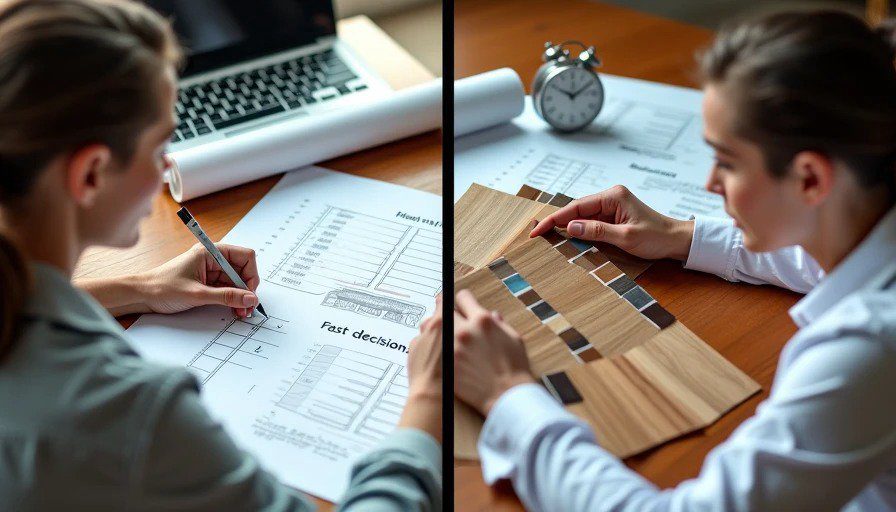
Week 1: Your designer sends a first draft of the layout with 3D renderings. You look at it, mark it up, send it back. This isn't a sales pitch — it's a working drawing you're meant to react to.
Week 2: The back-and-forth. Cabinet heights. Drawer stacks versus doors. Island prep sink or no? Corner lazy susan, blind cabinet with pullouts, or magic corner? These are not small decisions. A cabinetmaker would rather spend a week on them now than rip apart a finished cabinet later.
Week 3: Wood species, door style, finish color. This is where most projects get stuck — and it's almost never the shop's fault. If you waffle on stain colors for an extra week, that week comes out of your timeline, not theirs.
What's happening behind the scenes: While you're deciding, the shop is ordering your chosen lumber in rough-sawn planks from certified forests. Those planks arrive and immediately go into a climate-controlled space to acclimate to the shop's humidity — a minimum of 10 days. Wood breathes. It moves. If you rush this step, panels will cup within 12 months.
Weeks 4–5: Milling & Rough Cutting
The saws finally start.
Your acclimated lumber is now jointed, planed, and cut to oversize. This isn't CNC mass-production — each piece is handled individually. Mass-market cabinets hide joins; custom cabinets anticipate movement. That means every panel is cut with expansion and contraction cycles built in.
Why it takes two full weeks: You can't rush wood movement. A mass-market shop cuts particleboard from standard sheets in days. A custom shop works with solid timber that requires patience.
Weeks 6–10: Joinery & Assembly
The invisible difference — and the longest stretch.
This is where custom cabinets separate themselves from everything else.
A mass-market cabinet comes together in about a week using cam locks, dowels, and thermoplastic edge banding. Assembly requires an Allen key.
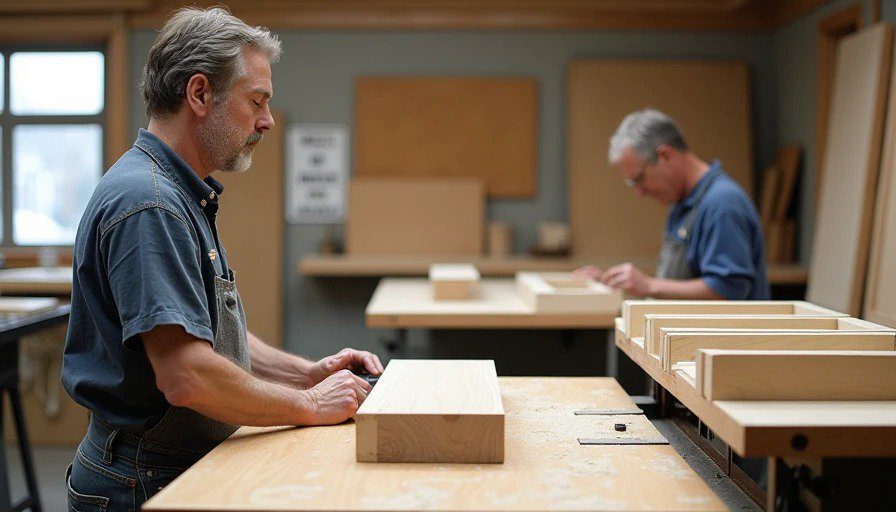
A bespoke cabinet spends five weeks in joinery and assembly. Every carcass is assembled using mortise and tenon or dovetail joinery. No metal fasteners. No cam locks.
A number worth remembering: One custom drawer takes 4.5 hours to join, glue, clamp, and cure. A mass-market drawer takes 11 minutes on a 5-axis CNC.
You cannot batch-sand dovetailed corners. You cannot automate the fit-check between a drawer front and its face frame. These tolerances are measured in the width of a business card — 0.3mm. Mass-market tolerances are measured in millimeters, not tenths of millimeters.
Weeks 11–13: Sanding, Finishing & Curing
The part everyone underestimates.
Finish is where custom cabinets live or die. A painted finish alone can take 8–10 weeks depending on the system. Each coat needs to cure before the next goes on. Sand between coats. Inspect. Sand again.
During these weeks, your cabinets are not being "rushed" — they're being protected from being rushed. The shop knows that a finish applied too fast will fail within years, not decades.
Week 14: Quality Check, Packaging & Shipping
The final hurdle.
Every cabinet is inspected, wrapped, and loaded. Then it's scheduled for delivery. One more week for shipping and installation prep — and that's if your site is ready.
Here's the catch most homeowners miss: Lead time is not the whole remodel. The cabinet manufacturing lead time may average 6–12 weeks, but the full kitchen journey can stretch to 11 months from idea to completion. Those 14 weeks are just one piece of a much larger puzzle.
The "Rush Fee" Question: When Does It Actually Help?

You've seen it on the quote: "Expedited production available for an additional fee." It sounds like a magic button. It's not.
Here's the truth about rush fees in custom cabinetry:
When it helps: A rush fee moves your order to the top of the production schedule and reduces processing time. If the shop is booked solid for the next six weeks and you need cabinets in eight, paying the fee might bump you ahead of other jobs. It compresses the queue, not the craft.
When it doesn't help: A rush fee does not change the fundamental timeline of wood acclimation, glue curing, or finish drying. No amount of money makes dovetail joinery happen faster. No fee accelerates the 10-day minimum for lumber to acclimate. If a salesperson promises you a 10-week kitchen and the doors alone take 5 weeks, ask them what they're cutting.
The real question to ask: Is the delay because the shop is backlogged, or because the work itself takes time? If it's backlog, a rush fee might help. If it's craft, a rush fee is just an expensive way to get the same cabinets at the same time — or worse, compromised quality.
Cost reality: Rush fees in custom manufacturing typically run 30–60% more than standard pricing. For a $20,000 cabinet order, that's $6,000–$12,000 to maybe save a few weeks. Worth it only if a missed delivery would cost you more — like idle contractors, rescheduled trades, or a move-in date you cannot miss.
What You Should Be Doing During the 14-Week Wait
The biggest mistake homeowners make during the cabinet wait is nothing. They sit back, assume everything is handled, and panic when the delivery truck shows up and the kitchen isn't ready.
Here's your waiting-period action plan:
Month 1 (Weeks 1–4): Lock Everything Down
Finalize every decision — and I mean every one. Appliance models, sink size, faucet placement, hardware style. Once production starts, changes delay the process.
Order your countertops. Quartz and granite slabs can take 1–3 weeks after templating. But the templating can't happen until cabinets are installed. So order the material now — lock in the slab — so it's ready when you need it.
Order tile, flooring, and lighting. Imported tile can take 12 weeks. Don't wait.
Month 2 (Weeks 5–9): Prepare the Site
Schedule demolition so it happens after the cabinets are 6–10 weeks into production. If you demo too early, your kitchen sits gutted for months. If you demo too late, the cabinets arrive to an unprepared site.
Clear the space. Remove all old cabinets, appliances, and personal belongings from the renovation area.
Clear a delivery path. Ensure a clear pathway from your home's entry to the designated storage area for the cabinet boxes.
Confirm rough openings for plumbing, electrical, and HVAC. If these aren't ready, installation stops before it starts.
Month 3 (Weeks 10–14): Get Ahead of Installation
Schedule your installer — not for "sometime after the cabinets arrive," but for a specific date. Good installers book weeks in advance.
Prepare for delivery. Know what day the truck is coming. Be home. Have help ready.
Order your appliances if you haven't already. They need to arrive around the same time as the cabinets.
Where Are You in the Cabinet Wait Right Now?
Take an honest look at your timeline:
Just signed? You're in Weeks 1–3. Your job right now is decisions. Fast decisions = faster delivery. Slow decisions = slower delivery. The shop isn't the bottleneck — you are.
A month in? Your lumber is acclimating or being milled. This is the quiet period. Use it to order everything else — tile, counters, appliances, lighting.
Two months in? Your cabinets are in joinery and assembly. The site should be ready or getting ready. Demo should be scheduled or underway.
Three months in? Finishing and curing. Your site should be cleared, delivery path ready, installer booked.
Less than a month to go? Confirm the delivery date. Confirm the installer. Confirm the site is ready. Then take a breath — you've done the work.
The Bottom Line
Fourteen weeks feels like forever — until you understand what's happening inside those weeks. Your cabinets aren't sitting on a shelf somewhere. They're being designed, milled, joined, finished, and cured by craftspeople who measure tolerances in business-card widths.
The rush fee might save you a week or two if the shop is backlogged. It won't save you from wood movement, glue cure times, or finish drying. And nothing — nothing — saves you from your own indecision.
So here's your real job during the 14-week wait: decide fast, order everything else early, and get the site ready before the truck arrives. Do that, and the 14 weeks will feel like time well spent. Skip it, and you'll be eating takeout off a folding table while your beautiful new cabinets sit in boxes in the driveway.
So, where are you in your cabinet wait right now? Take a moment to assess your own timeline and check off the actions above — you might find that a little planning today saves a lot of panic later.